Sinus Lift Surgery for Dental Implants – Everything You Need to Know Before Treatment
Table of Contents
If you’ve been told that you don’t have enough bone in your upper jaw for dental implants, don’t lose hope. A sinus lift (also called sinus augmentation) is one of the most predictable procedures that allows patients to receive strong, long-lasting dental implants even after years of tooth loss.
As an Oral and Maxillofacial Surgeon, I perform both crestal sinus lift and lateral sinus lift procedures using evidence-based techniques designed to maximize safety, comfort, and long-term implant success.
Here are the questions my patients ask me most often.
Who is the best doctor to perform a sinus lift for dental implants?
A sinus lift is not just a bone graft—it is a delicate surgical procedure performed very close to the maxillary sinus membrane. The success of your future dental implant depends greatly on how carefully this surgery is performed.
I strongly recommend having your sinus lift performed by an experienced Oral and Maxillofacial Surgeon, especially if your bone height is limited or your case is complex.
An Oral and Maxillofacial Surgeon has years of hospital-based surgical training in:
- Advanced facial anatomy
- Bone grafting procedures
- Sinus surgery
- Management of surgical complications
- Implant reconstruction
Choosing an experienced surgeon significantly reduces the chances of sinus membrane perforation, infection, graft failure, implant failure and additional surgeries.
Your dental implant is only as strong as the foundation beneath it.

Kumkum Goel

Dubai
I recently underwent a dental implant treatment under the expert care of Dr. Ujjwal Gulati, and I am truly grateful for the exceptional treatment I received. Being a heart patient, I was facing a serious dental infection that could have complicated my heart condition. However, Dr. Gulati handled my case with utmost precision, care, and expertise.
He suggested the best possible treatment options, guided me at every step, and ensured all precautions were taken keeping my heart health in mind. The entire experience felt like an international-level treatment, yet it was provided at a very nominal and reasonable cost.
Thanks to Dr. Ujjwal Gulati and his team, I am now feeling much better and completely relieved from the infection. His professionalism, kindness, and deep understanding of complex medical cases make him one of the best dental specialists I’ve ever met.
Highly recommended for anyone looking for safe, advanced, and compassionate dental care.
What is a sinus lift?
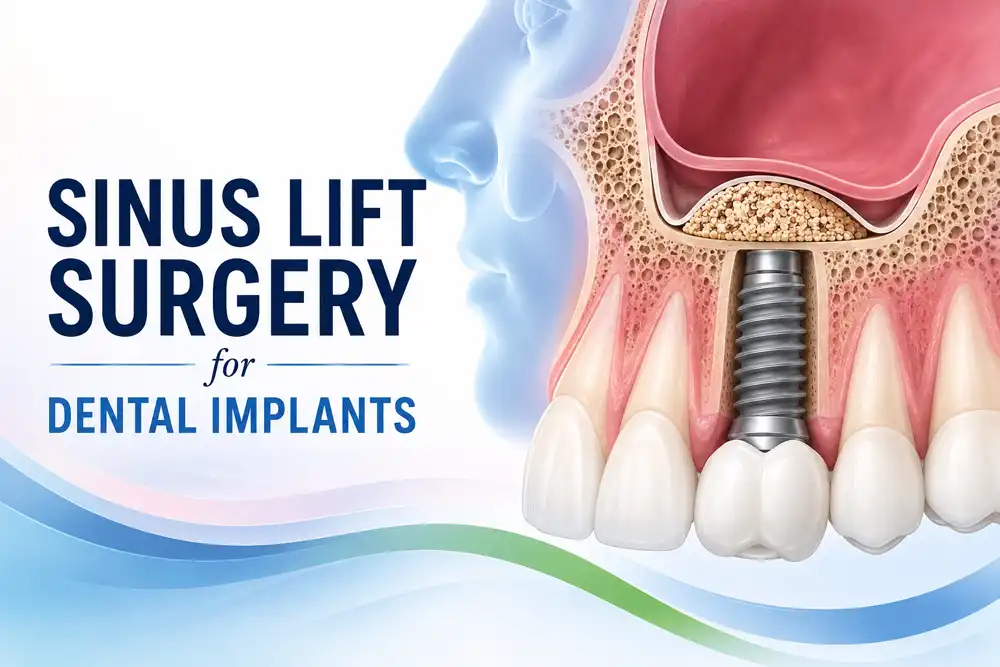
A sinus lift is a procedure in which the floor of the maxillary sinus is gently elevated and bone graft material is placed underneath it. This creates enough bone height to securely place dental implants in the upper back jaw where bone is often insufficient. Without adequate bone support, implants cannot achieve long-term stability.
A sinus lift makes dental implants possible even when you have been told that you “don’t have enough bone.”
Vijay Verma, Businessman

Australia
My experience with Dr Ujjwal has been great, rather it’s more of a journey than an experience. After consulting literally 10 dental surgeons across Delhi, I landed at Dr Ujjwal’s clinic and somehow received the trust and assurance which i was looking for.
Dr Ujjwal’s expertise is beyond any comparisons which helped me to overcome my inhibitions regarding the whole surgical procedure. His whole team is extremely well-trained and the complete setup was upto the mark.
I highly recommend Dr Ujjwal for any kind of complicated dental issues as was mine. I am really glad to have met him. Good luck for future.
What is the difference between a crestal sinus lift and a lateral sinus lift?
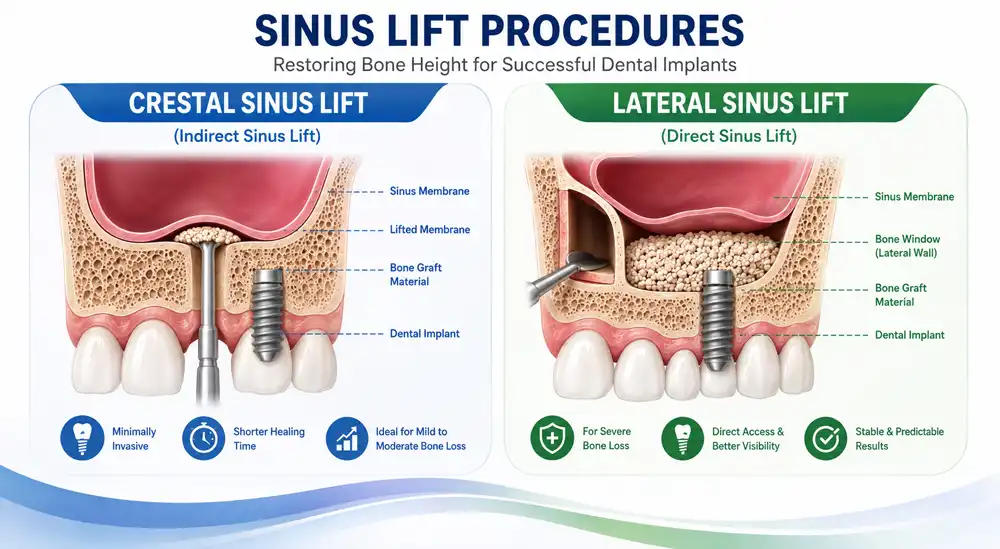
Crestal Sinus Lift Procedure
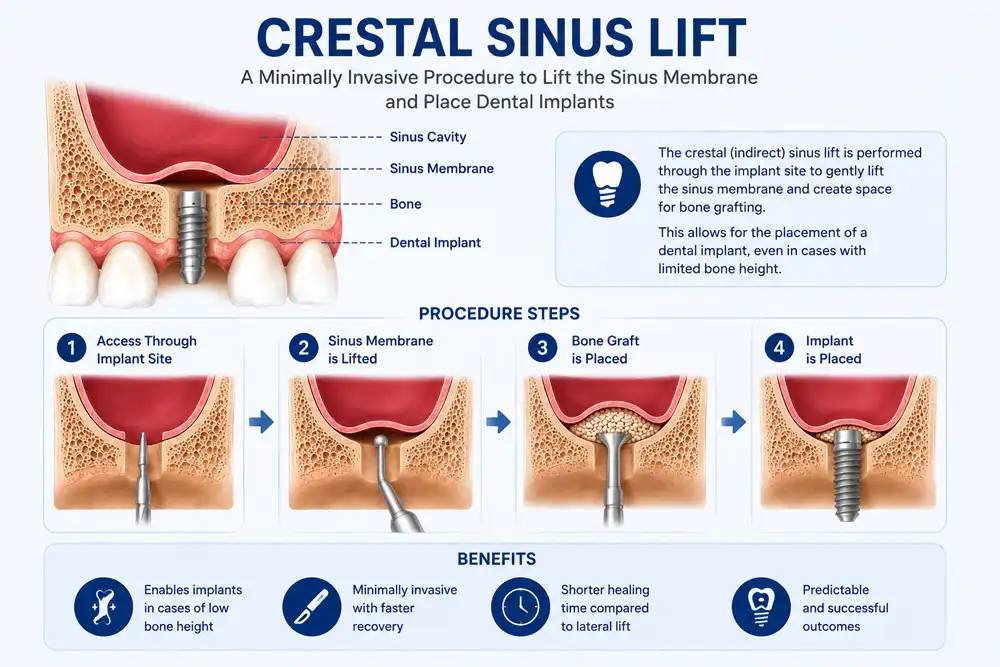
A crestal sinus lift is performed through the implant site itself.
It is ideal when there is still a reasonable amount of bone present.
Advantages include:
- Less invasive
- Faster healing
- Minimal swelling
- Often completed along with implant placement
- Reduced discomfort
Lateral Sinus Lift Procedure
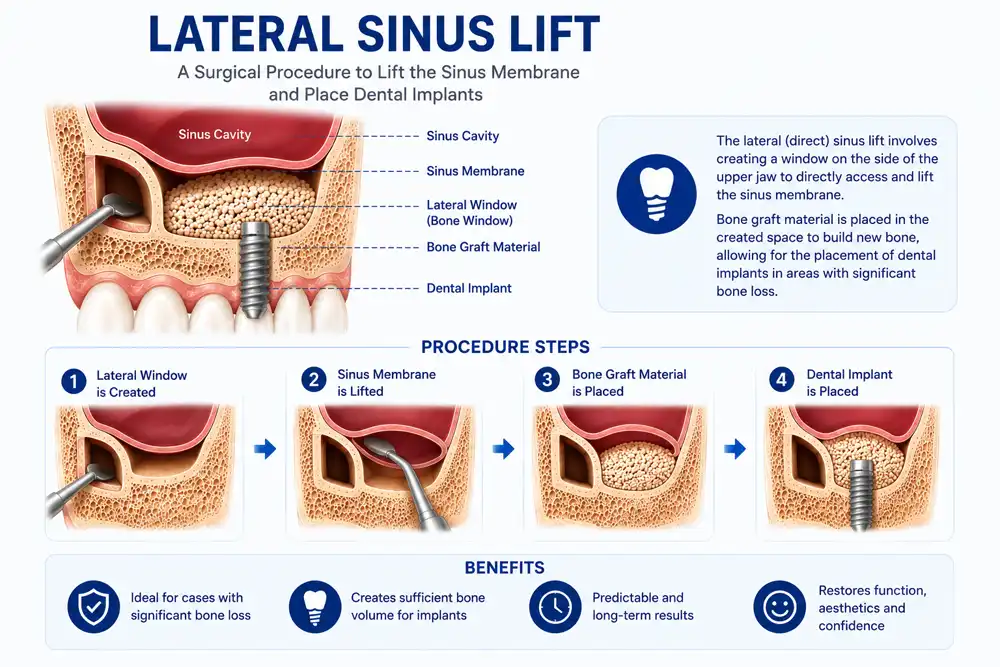
A lateral sinus lift is recommended when bone loss is significant. A small window is created on the side of the upper jaw to gently lift the sinus membrane before placing the graft. It allows reconstruction of severely deficient bone and offers highly predictable long-term outcomes when performed by an experienced surgeon.
Shazia Hikmat

Afghanistan
My name is Shazia Hikmat From kabol Afghanistan. I live in India. I got my implant and RCT treatment done by Dr Ujjwal Gulati and his wife Dr Mehvash Gulati. They both did my treatment very well. I thank Dr Ujjwal and the entire indiadens team for a wonderful experience. (Translated into English).
Is sinus lift surgery painful?
One of the biggest surprises for my patients is how comfortable the procedure actually is.
The surgery is performed under profound local anaesthesia and, when required, conscious sedation. Most patients describe the recovery as easier than a tooth extraction.
You may experience:
- Mild swelling
- Slight pressure
- Minimal discomfort
Pain is usually well controlled with routine medications.
Ashok Kumar, Physician

United Kingdom
I came here for my implant work in Indiadens SDA branch by ujjwal gulati. The treatment went very well and i am very pleased and happy with the way they have treated me and the result is excellent. Thank you very much.
Is a sinus lift safe?
Yes.
When performed by an experienced Oral and Maxillofacial Surgeon after proper CBCT evaluation, sinus lift surgery has an excellent success rate. Modern surgical techniques, magnification, microsurgical instruments and advanced bone graft materials have made sinus augmentation extremely predictable. Proper planning minimizes risks and maximizes implant success.
Dr. Saurabh Rawall, Spine Surgeon

USA
I found both the doctors here very ethical and skillful.
Highly recommend their services for dental treatment in South and West Delhi.
My mother got implants done with them. She is extremely satisfied with the excellent results.
How successful is sinus lift surgery?
Scientific studies consistently report success rates exceeding 95%.
The long-term outcome depends on several key clinical factors:
- Surgical technique & skill: Precision in elevating the delicate Schneiderian membrane without tearing.
- Experience of the surgeon: Specialist expertise in Oral & Maxillofacial Surgery ensures predictable bone regeneration.
- Quality of bone graft material: Utilizing high-grade autogenous, allogenic, or synthetic grafts.
- Patient compliance: Adhering strictly to post-operative instructions, avoiding smoking, and maintaining oral hygiene.
When performed by an experienced specialist, a sinus lift creates a dense, healthy bone bed that allows your dental implants to integrate just as securely as implants placed in natural bone.
Shipra Chandra

New Delhi, India
I had a wonderful experience with Dr Ujjwal Gulati and Dr Pooja. I had dental implant, root canal treatment and cavity fillings done at the clinic. All the procedures were very well explained and were done smoothly with patience and were comparatively very less painful.
What is the recovery time after a sinus lift?
Recovery from a sinus lift is surprisingly quick and straightforward for most patients.
Initial Healing (1–2 Weeks): Minor swelling and mild bruising usually peak within 48 to 72 hours and resolve within a week. Most patients return to work and light daily activities within 1 to 2 days.
Bone Integration (4–9 Months): While you will feel back to normal within a few days, the bone graft requires several months to mature, fuse with your natural jawbone, and form solid bone capable of supporting an implant.
Key Post-Op Care Guidelines:
- Avoid blowing your nose forcefully for at least two weeks.
- Sneezes should be kept open-mouthed to prevent sinus pressure build-up.
- Avoid strenuous physical exercise for 3 to 5 days.
- Take prescribed antibiotics and pain medications as directed.
Priyanka Bhardwaj
United Kingdom
I came to Dr. Gulati with my mum and dad’s recommendation. I am very happy with the care I received.
I had an implant, a root canal and multiple fillings. I will definitely be visiting every year. I am very happy with the thoroughness and care of the treatments.
Thank you very much!
Can a sinus lift and dental implant placement be done at the same time?
Yes, in many cases. This is known as simultaneous (or immediate) implant placement.
Whether you qualify for a simultaneous procedure depends on your existing bone height:
Simultaneous Placement: If you have at least 4 to 5 mm of natural bone remaining, there is usually enough initial stability to place the sinus graft and the dental implant during the same appointment.
Staged Placement: If you have severe bone loss (less than 4 mm of residual bone height), a staged approach is required. The sinus lift is performed first, and the graft is allowed to heal for 6 to 9 months before the dental implants are placed.
During your initial 3D CBCT consultation, Dr. Ujjwal Gulati will evaluate your exact bone volume to determine if a single-stage approach is safe for you.
What happens if I don’t get a sinus lift when I need one?
Attempting to place a dental implant in the upper back jaw without adequate bone height leads to high failure rates and severe complications, including:
Implant Failure: The implant will lack primary stability, leading to mobility and eventual loss.
Sinus Penetration: The implant screw can push directly into the sinus cavity, causing chronic sinusitis, infections, nasal drainage, or foreign-body reactions.
Prosthetic Instability: Insufficient bone leads to compromised chewing function and shortened implant longevity.
A sinus lift doesn’t just make implants possible—it protects your investment and ensures your new teeth last a lifetime.
Why Choose Dr. Ujjwal Gulati for Your Sinus Lift & Dental Implants?

Restoring your smile starts with choosing the right surgical specialist. As an Oral and Maxillofacial Surgeon, Dr. Ujjwal Gulati offers:
- Specialized Expertise: Advanced hospital-based training in complex jaw bone reconstruction and sinus surgery.
- 3D Guided Surgery: High-precision CBCT imaging for virtual treatment planning and minimal surgical invasiveness.
- Maximum Comfort: Customized anesthesia options, including conscious sedation, for a painless experience.
Ready to Restore Your Smile?
Book Your Consultation Today
Don’t let bone loss stand in the way of a permanent, confident smile.
Schedule a 1-on-1 consultation with Dr. Ujjwal Gulati to evaluate your upper jaw health and discover your personalized treatment plan.