Discovering a lump, swelling, or unexplained radiolucent shadow on your routine dental X-ray can feel overwhelming. Jaw and facial cysts frequently grow silently for months or years, hollow out healthy bone, and place facial nerves and teeth at risk.
Rushing into treatment without understanding what type of cyst you have, how aggressive it is, and who should treat it can lead to repeated surgeries, nerve damage, or facial deformity.
Table of Contents
What Exactly Is a Jaw or Orofacial Cyst?
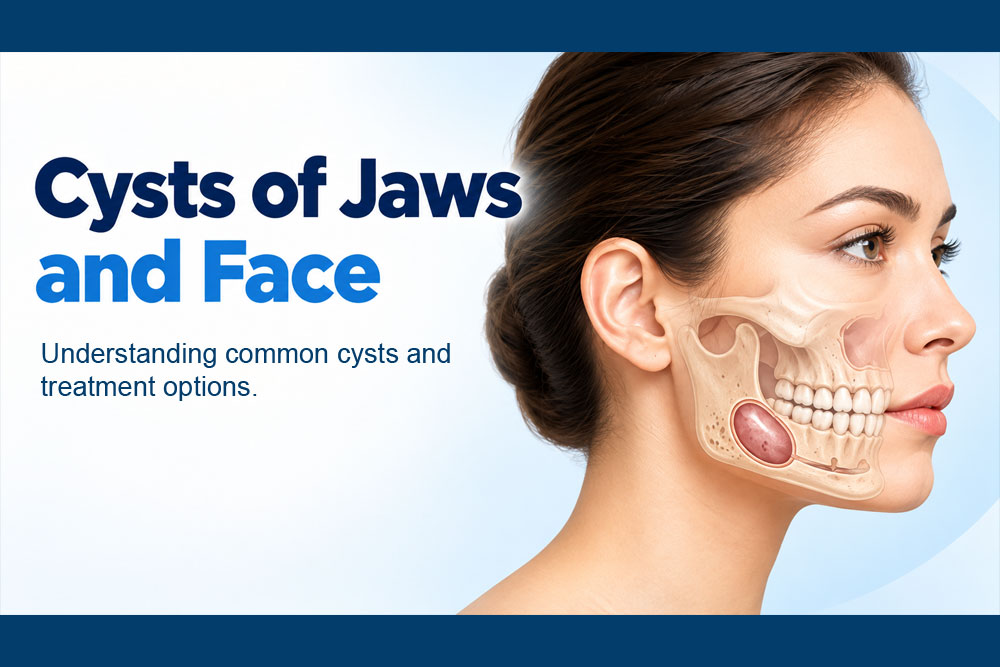
A cyst of the oral cavity and maxillofacial region is a pathological, fluid-filled or semi-fluid-filled sac lined by epithelium. As fluid builds up inside, the cyst expands, exerting pressure on the surrounding jawbone and causing progressive bone resorption.
Cysts of the jaws fall into two broad categories:
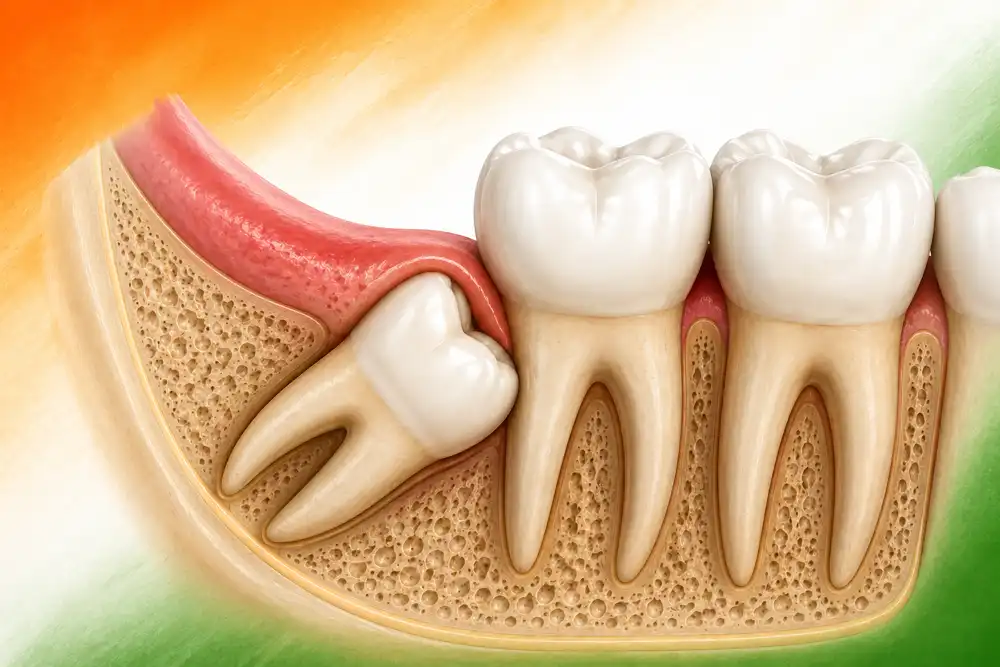
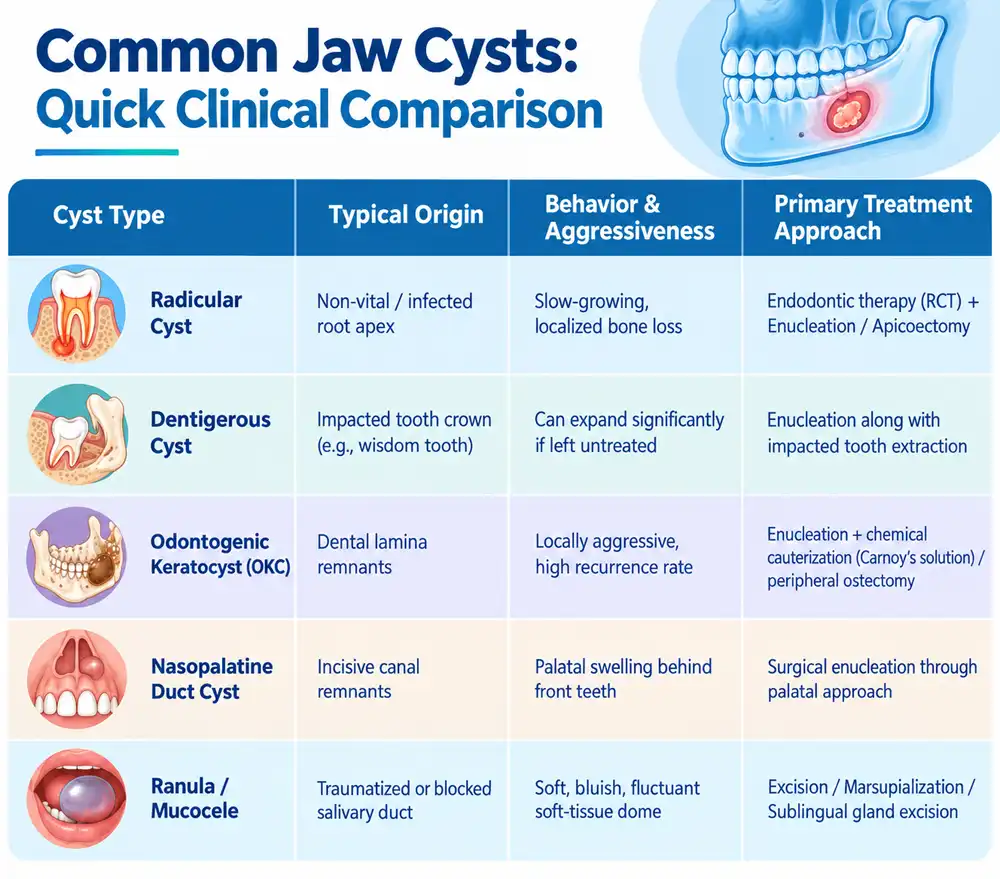
Odontogenic Cysts: Arise from tissue remnants involved in tooth development. Examples include Radicular (Periapical) Cysts caused by infected or necrotic teeth, Dentigerous Cysts surrounding the crowns of unerupted or impacted wisdom teeth, and Odontogenic Keratocysts (OKC), known for aggressive local expansion and high recurrence rates.
Non-Odontogenic & Soft-Tissue Cysts: Arise from trapped tissues during facial development (such as Nasopalatine Duct Cysts) or from blocked salivary glands (such as Mucoceles in the lips and Ranulas on the floor of the mouth).
Key Symptoms to Watch For
Many jaw cysts are discovered incidentally during an OPG (panoramic X-ray) or CBCT scan. However, as they expand, they can manifest with distinct warning signs:
- Firm or rubbery swelling in the lower or upper jaw
- Unexplained tooth mobility, tilting, or spacing changes
- Facial asymmetry or numbness (paresthesia) in the lower lip or chin
- A persistent salty or foul taste caused by spontaneous drainage
- Sudden pain, redness, and acute swelling if the cyst becomes secondarily infected
Why You Must See a Maxillofacial Specialist Before Surgery
Treating cysts of the facial skeleton is fundamentally different from a routine dental extraction. The jaws house major anatomical highways: the Inferior Alveolar Nerve (which provides sensation to your lower lip and chin), the Maxillary Sinus, and critical blood vessels.
An experienced Oral and Maxillofacial Surgeon brings hospital-grade surgical training, deep knowledge of head and neck anatomy, and reconstructive expertise to ensure complete lesion removal while preserving jaw strength, nerve sensation, and facial contours.
- 3D CBCT Imaging: High-resolution volumetric scans pinpoint the cyst’s boundaries relative to vital nerves and sinus cavities.
- Biopsy and Histopathology: Clinical and radiographic appearances can mimic benign or malignant tumors (such as ameloblastoma). A definitive tissue diagnosis prevents under-treatment or overly radical resections.
- Advanced Bone Reconstruction: Large cysts leave significant hollow defects in the jaw. Utilizing Guided Bone Regeneration (GBR) and bone grafting prevents pathological fractures and sets the foundation for future dental implants.
How Cysts of the Jaws and Face Are Treated
Depending on the size, location, and nature of the lesion, treatment typically follows one of three surgical pathways:
- Enucleation: The entire cyst sac is peeled out intact from the bone cavity. For aggressive entities like OKCs, the surgeon often supplements this with peripheral ostectomy (shaving the bony margins) to eradicate microscopic satellite cysts.
- Marsupialization / Decompression: For very large cysts encroaching on major facial nerves or sinus walls, a surgical window is created to release internal pressure. This triggers natural bone shrinkage and regeneration, allowing safe, definitive removal later without nerve injury.
- Bone Grafting & Defect Reconstruction: Once the lesion is cleared, bioactive bone grafts, collagen membranes, or platelet concentrates (PRF) are packed into the site to accelerate solid bone consolidation.
Frequently Asked Questions (FAQs)
Can a jaw cyst heal on its own without surgery?
No. True cysts are lined with living epithelium that constantly secretes fluid. Without surgical removal or decompression, the lesion will continue to expand, progressively destroying jawbone.
Are jaw cysts cancerous?
The vast majority of oral and jaw cysts are benign. However, certain aggressive cysts can mimic jaw tumors on X-rays. In rare instances, untreated chronic cyst walls can undergo neoplastic transformation. Every removed cyst should be submitted for histopathological evaluation.
Is jaw cyst removal surgery painful?
The procedure is performed under profound local anesthesia, conscious sedation, or general anesthesia, making the surgery completely painless. Post-operative discomfort and swelling are effectively controlled with modern pain regimens and anti-inflammatory protocols.
Will cyst removal leave a visible facial scar?
Most jaw cyst surgeries are executed intraorally—with incisions made entirely inside the mouth—leaving no external facial scars.
How long does it take for the bone cavity to fill back in?
Soft tissues typically heal within 10 to 14 days. New bone regeneration takes 6 to 12 months, monitored via follow-up panoramic X-rays.

Lakshya Singh

New Delhi, India
If you want the best dental treatment I would definitely recommend Indiadens.
Doctors are very professional, polite, experienced.
I had a huge dental cyst which was creating a lot of trouble. After that I visited Indiadens. They provided me the best treatment for that. Finally after that they removed that cyst. Now it’s perfectly fine. And all the credit goes to Indiadens and their doctors.
Book an Expert Evaluation
If you have been diagnosed with a jaw swelling, an impacted tooth cyst, or an abnormal radiolucency on your X-ray, prioritize specialized surgical care before proceeding with invasive procedures.
Schedule a consultation with Dr. Ujjwal Gulati